Israeli Strike Raises Fears of a Wider Clash Between Israel, Turkey and Syria
An Israeli airstrike on a Syrian military air base near the Turkish border has triggered fresh tensions between Israel, Turkey and Syria, prompting a sharp response from the United States.
US Special Envoy for Syria and Ambassador to Turkey Tom Barrack warned that the attack on the Abu al-Duhur air base represented an unnecessary escalation that could threaten regional stability. The incident has also raised concerns that a misunderstanding between Israeli and Turkish forces could potentially lead to a direct military confrontation.
The United States is now working to establish a formal deconfliction mechanism involving Israel, Turkey and Syria to prevent future incidents and improve communication between the three sides.
Israel Strikes a Base Near the Turkish Border
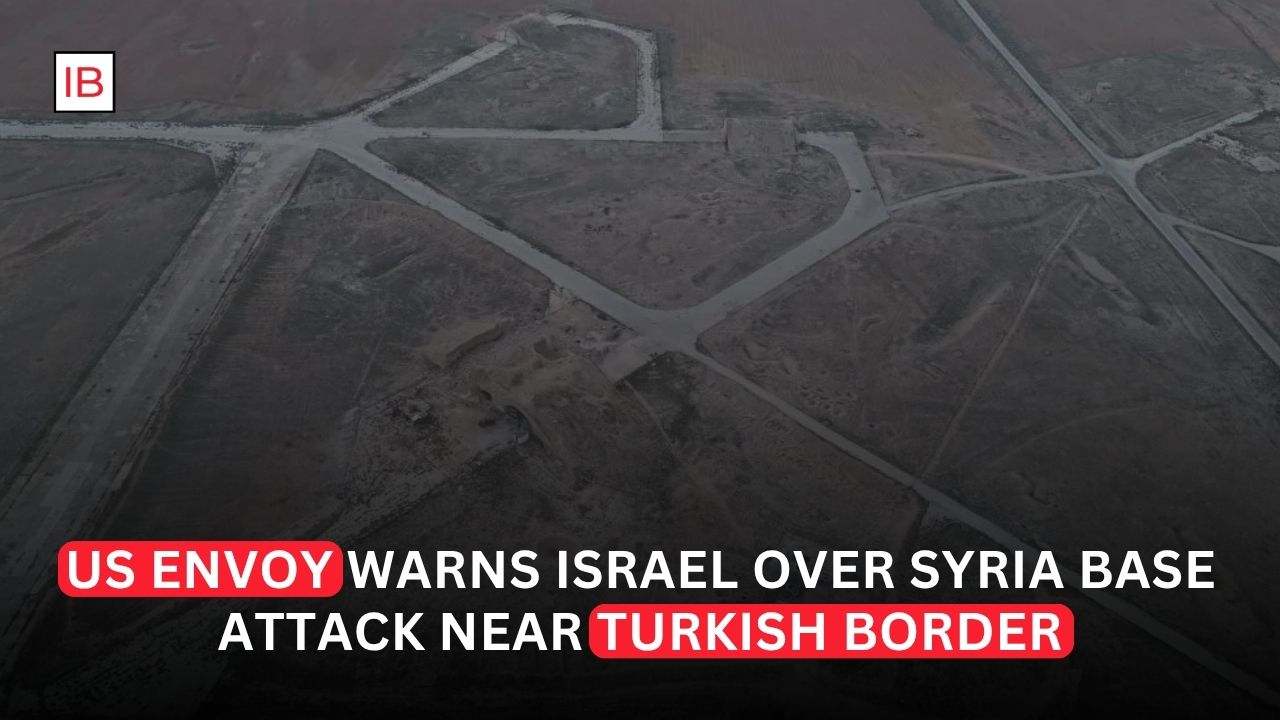
The Israeli attack targeted the Abu al-Duhur air base in Syria’s northwestern Idlib region, approximately 70 kilometers from the Turkish border.
Syrian state media reported that Israeli aircraft carried out multiple strikes against the runway and storage facilities. The attack caused damage to the base, although no casualties were initially reported.
The air base has been largely inactive as a dedicated military facility since 2013 and changed hands several times during Syria’s long civil war.
However, the site has recently gained strategic importance because of Turkey’s growing military and political relationship with Syria’s government.
The timing of the attack intensified concerns because reports indicated that Turkish officials had recently visited the facility and that the base was undergoing rehabilitation.
Israel Feared a Turkish Military Build-Up
Israel’s government justified the strike by arguing that Turkey was preparing to increase its military presence at the Syrian base.
Israeli officials said they had repeatedly warned Damascus that allowing Turkish forces to deploy at Abu al-Duhur would pose a threat to Israeli security.
The Israeli government argued that Syria was moving toward violating an existing security understanding by permitting a Turkish military deployment at the site.
Turkey and Syria disputed that interpretation.
Syrian officials said there were no plans to establish a permanent Turkish military presence at the base and maintained that the facility would remain under Syrian sovereignty. Turkey also rejected allegations that it was preparing a deployment that threatened Israel.
The disagreement highlights the central problem behind the incident: Israel, Turkey and Syria appear to have been operating with very different understandings of what was happening at the air base.
Tom Barrack Calls the Strike an Unnecessary Escalation
The strongest international reaction came from Tom Barrack.
Barrack said the United States was deeply concerned about the Israeli strike and described it as an unnecessary escalation that does not advance regional stability.
His criticism was particularly significant because the United States maintains close relationships with both Israel and Turkey.
Washington has been attempting to reduce tensions in Syria while supporting the country’s political and economic reconstruction following the fall of Bashar al-Assad’s government.
Barrack later revealed that neither the United States nor Turkey had been informed in advance about the Israeli operation.
According to his account, Turkey observed aircraft moving north toward its territory and could reasonably have prepared its own military response. He said the situation was ultimately prevented from deteriorating further because “calm heads” prevailed.
US Says Intelligence Behind the Attack Was Incorrect
The dispute became even more serious when Barrack said that the intelligence reportedly used to justify Israel’s attack did not support the claim that Turkey was moving military assets to the base.
According to Barrack, Israel had shared information with Washington suggesting that Turkey might be preparing a military deployment at Abu al-Duhur. US intelligence agencies examined the claim and concluded that the information was not accurate.
Barrack also suggested that there may have been miscommunication among different Israeli institutions.
If accurate, the episode could become an embarrassing diplomatic problem for Israel because the strike was carried out against a facility based on a threat assessment that the United States later questioned.
The incident also demonstrates how quickly intelligence failures or misunderstandings can create military crises.
Turkey and Israel Face a Growing Rivalry
The airstrike is part of a much broader struggle for influence in post-war Syria.
Turkey has become one of the most important allies of Syrian President Ahmed al-Sharaa.
Ankara has supported efforts to rebuild Syrian institutions, train military personnel and strengthen the country’s security infrastructure.
Israel, meanwhile, has viewed the growing Turkish role in Syria with increasing suspicion.
Israeli leaders are concerned that a stronger Turkish military presence could change the regional balance of power and potentially create a new security challenge along Israel’s northern frontier.
The result is an emerging rivalry between two of the Middle East’s strongest militaries.
Unlike previous conflicts in Syria, this competition does not primarily involve Iran or Russia.
Instead, the future of Syria is increasingly becoming a point of strategic competition between Israel and Turkey.
The Risk of an Accidental Military Clash
Perhaps the most concerning aspect of the incident is how close it may have come to a direct confrontation.
Turkey was reportedly not warned about the Israeli air operation.
When Turkish forces observed aircraft moving toward their area of operations, they could have interpreted the movement as a potential threat.
Barrack specifically warned that Turkey could reasonably have prepared a military response.
Fortunately, no direct clash occurred.
However, the incident exposed a major weakness in regional security arrangements.
Israel, Turkey and Syria all have military interests in the same geographical area, yet there is no sufficiently robust communication system to prevent misunderstandings.
In a region where military aircraft, drones and air-defense systems operate in close proximity, even a small error could produce much larger consequences.
Washington Pushes for a Deconfliction Mechanism
The United States is now attempting to create a more formal communication framework involving Israel, Turkey and Syria.
A deconfliction mechanism would allow military and political officials to exchange information and prevent accidental confrontations.
Such arrangements are commonly used when countries with competing military interests operate in the same region.
Barrack said that the United States already facilitates information-sharing and dialogue but that a stronger system with greater resources is needed.
He argued that investing in communication is far less costly than relying on military force to send political messages.
The proposed mechanism could become particularly important if Turkey expands its role in rebuilding Syria’s military infrastructure.
Israel would want information about major developments near its security zone, while Turkey would need assurances that Israeli aircraft would not unexpectedly target areas connected to its forces.
Syria Remains a Major Source of Regional Tension
The crisis also demonstrates how unstable Syria remains despite major political changes.
Since the overthrow of Bashar al-Assad in 2024, the country’s new leadership has attempted to rebuild state institutions and establish stronger relationships with regional powers.
Turkey has emerged as one of its most important supporters.
At the same time, Israel has continued military operations inside Syria, arguing that it must protect its national security and prevent hostile military capabilities from developing near its borders.
The result is a complicated environment in which Syria’s attempts to rebuild its military can be interpreted by neighboring countries as a potential threat.
That makes even ordinary infrastructure projects politically sensitive.
Israel and Syria Have Held De-Escalation Talks
The airstrike occurred despite ongoing efforts to reduce tensions between Israel and Syria.
The two sides have held several rounds of discussions concerning border security and de-escalation.
However, no comprehensive agreement has yet been reached.
The Abu al-Duhur incident could make future negotiations more difficult.
Syria may argue that Israel cannot be trusted to respect diplomatic understandings if it continues launching strikes inside Syrian territory.
Israel, meanwhile, is likely to continue demanding assurances about foreign military activity in Syria.
The United States will therefore face a difficult diplomatic challenge.
Washington must try to maintain close relationships with Israel and Turkey while also supporting stability in Syria.
Turkey Condemns Israel’s Military Action
Turkey strongly condemned the airstrikes and described them as a violation of Syria’s sovereignty.
Ankara called on the international community to take stronger action against what it described as Israel’s escalating military activity in Syria.
The disagreement comes at a time when relations between Turkey and Israel are already strained over several regional issues.
Syria is now adding another major source of friction.
Turkey’s expanding influence under President Recep Tayyip Erdoğan and its support for Syria’s new government have made Ankara an increasingly important player in the country’s future.
Israel’s willingness to strike locations where it believes Turkish influence could expand suggests that the rivalry may continue.
The Attack Could Reshape Syria’s Security Environment
The Abu al-Duhur strike could have consequences beyond the immediate damage to the air base.
If Israel continues targeting Syrian military infrastructure associated with Turkish assistance, Turkey and Syria may seek to strengthen their military coordination.
That could produce the opposite result from what Israel intended.
Rather than discouraging cooperation between Ankara and Damascus, military strikes could potentially push them closer together.
Turkey may also increase pressure for stronger guarantees regarding the safety of its personnel and military projects in Syria.
The future development of Syrian military bases will therefore become an increasingly sensitive issue.
A Difficult Test for US Diplomacy
For the United States, the incident is particularly complicated.
Israel and Turkey are both major American partners, while Washington is also trying to support the stabilization of Syria.
President Donald Trump’s administration has invested political effort in preventing Syria from returning to widespread conflict.
The Israeli strike created additional frustration among US officials because it risked escalating tensions between countries Washington is trying to keep from confronting each other directly.
The Trump administration now faces the challenge of persuading all three sides to accept a more structured communication system.
That may be easier said than done.
Israel wants freedom to act against perceived security threats.
Turkey wants to expand its support for Syria.
And Syria wants to rebuild its sovereignty and military institutions.
Reconciling those interests will require careful diplomacy.
Looking Ahead
The Israeli strike on Syria’s Abu al-Duhur air base has exposed how quickly the competition for influence in post-war Syria could turn into a wider regional crisis.
The United States has responded by warning that the attack was an unnecessary escalation and by pushing for a formal deconfliction mechanism between Israel, Turkey and Syria.
The situation became even more sensitive after US envoy Tom Barrack said that American intelligence did not support claims that Turkey was preparing to move military assets to the targeted base.
For now, the immediate crisis appears to have been contained.
There were no reported casualties, and Turkey did not respond militarily.
However, the underlying tensions remain.
Turkey continues to strengthen its relationship with Syria’s new government, while Israel remains determined to prevent what it sees as emerging security threats near its borders.
The Abu al-Duhur incident therefore may not be an isolated event.
Instead, it could represent an early warning of a much larger geopolitical struggle over Syria’s future.
The greatest danger may not come from a deliberate decision by Israel or Turkey to go to war, but from a misunderstanding, intelligence failure or military miscalculation that leaves both sides reacting to a threat they believe is real.
Washington’s proposed communication mechanism could help reduce that risk.
Whether Israel, Turkey and Syria can establish enough trust to make such a system effective may determine whether Syria becomes a battleground for another major regional confrontation.