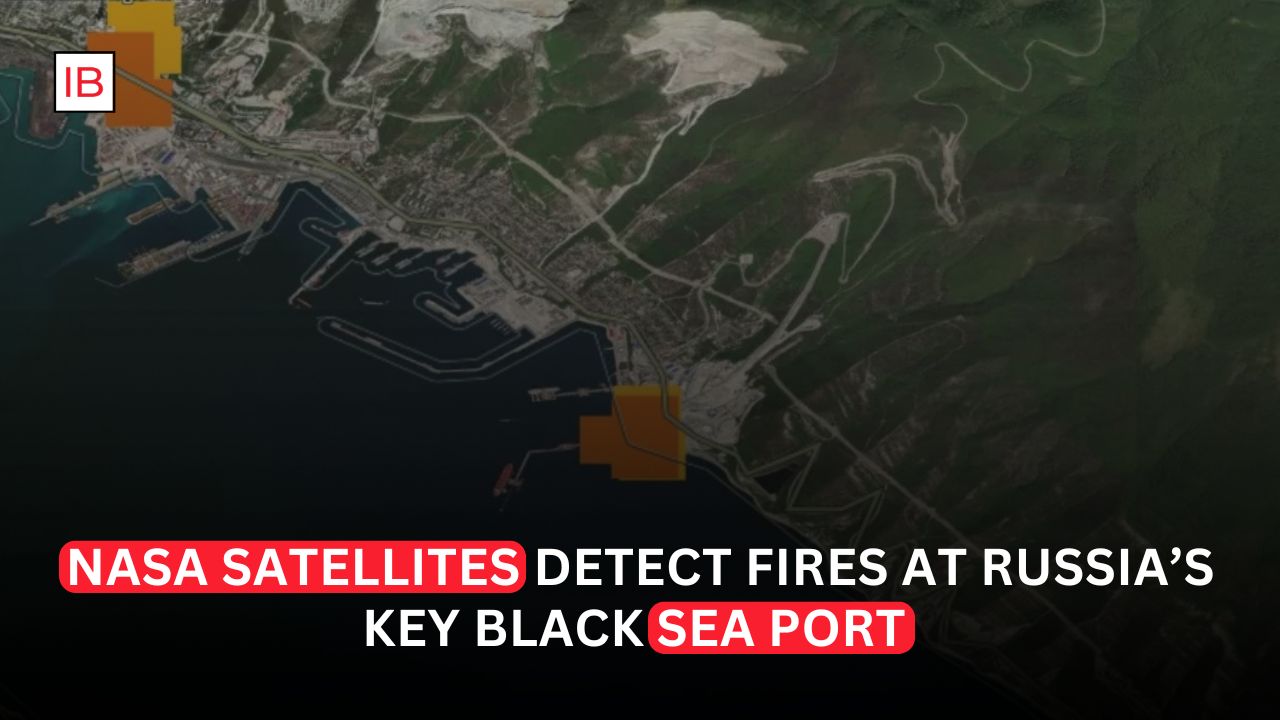
A fire was detected at Russia’s Black Sea port of Novorossiysk, according to satellite data, adding to growing concerns about the security of one of the country’s most important energy and export hubs.
NASA satellite observations detected thermal anomalies in the area, providing evidence of a significant fire near the port. The development comes as Russia’s Black Sea infrastructure faces increasing security risks amid the continuing war with Ukraine.
Novorossiysk is particularly important because it handles large volumes of oil, petroleum products, grain and other commodities. Any disruption at the port could therefore have consequences well beyond Russia’s southern coastline.
Why Novorossiysk Matters
Novorossiysk is one of Russia’s most strategically important commercial ports.
Located on the northeastern Black Sea coast, the port serves as a major export route for Russian commodities and plays an especially important role in the country’s energy infrastructure.
The port is also closely connected to the Caspian Pipeline Consortium, which transports crude oil from Kazakhstan to the Black Sea for export to international markets.
That means any serious disruption around Novorossiysk can potentially affect global energy flows.
The port’s significance has increased as Russia has shifted more of its trade toward southern maritime routes following sanctions and restrictions imposed by Western countries.
Satellite Data Provides a Key Signal
NASA’s satellite systems can detect thermal anomalies associated with fires, industrial activity and other sources of intense heat.
In situations where access to an affected area is limited, satellite observations can provide independent evidence that an incident has occurred.
The detection at Novorossiysk does not by itself establish the cause of the fire.
That distinction is important.
A thermal anomaly can confirm that something is burning or producing unusual heat, but determining whether the incident resulted from an accident, an attack or another cause requires additional information.
The Black Sea Has Become a High-Risk Environment
Russia’s Black Sea ports have faced increasing security threats during the war.
Ukraine has repeatedly targeted Russian military and maritime infrastructure, including facilities and vessels associated with Russia’s Black Sea Fleet.
The broader Black Sea region has also seen attacks involving drones and missiles, forcing Russia to strengthen defenses around strategically important infrastructure.
Novorossiysk has become particularly sensitive because it combines military, commercial and energy-related activity.
Any incident there therefore attracts immediate attention from energy traders and geopolitical analysts.
Energy Markets Are Watching Closely
The biggest potential economic consequence is disruption to oil exports.
Russia remains one of the world’s largest oil producers, and its ability to move crude and refined products through ports is critical to global supply.
Novorossiysk provides an important export route for both Russian and Kazakh-origin crude.
If port operations were significantly interrupted, vessels could be delayed, shipments could be rescheduled and available export capacity could temporarily decline.
Even a short disruption can influence oil prices if traders believe it could persist.
However, a fire at the port does not automatically mean there has been a major loss of oil supply.
The scale of the incident, which facilities were affected and whether loading operations continue are the crucial questions.
The Grain Trade Adds Another Layer
Novorossiysk is also a major grain-export hub.
Russia has become one of the world’s most important wheat exporters, supplying markets across the Middle East, Africa and Asia.
The Black Sea is central to that trade.
Any prolonged disruption could therefore affect not only energy markets but agricultural commodity markets as well.
The impact would depend heavily on the duration and location of the disruption.
A localized fire could have little lasting effect if alternative terminals remain operational.
A broader shutdown would be much more consequential.
Insurance Costs Could Rise
Another potential consequence is higher maritime insurance costs.
As security risks increase around Russian ports, shipping companies and insurers may demand greater premiums to cover vessels entering affected areas.
That can increase the cost of transporting commodities even when the physical infrastructure remains operational.
Higher insurance and freight costs can eventually feed into commodity prices.
This is one reason markets sometimes react to geopolitical incidents before an actual supply shortage develops.
Russia Faces Growing Pressure on Infrastructure
The incident comes amid a broader pattern of attacks and disruptions affecting Russian infrastructure.
Energy facilities, refineries, pipelines, warehouses and transport networks have increasingly become part of the wider conflict.
Ukraine has sought to put pressure on Russia’s ability to generate revenue and maintain military logistics, while Moscow has continued targeting Ukrainian infrastructure.
That has created a growing risk that commercial facilities become caught in the conflict.
For Russia, protecting such infrastructure is increasingly difficult because the country has an enormous network of facilities spread across a wide geographic area.
The Strategic Importance of the Black Sea
The Black Sea has always been strategically important to Russia.
It provides access to Mediterranean shipping routes through the Bosporus and Dardanelles and connects Russia to major global markets.
The region also links several major agricultural and energy exporters to international buyers.
The war has transformed the Black Sea into a major theater of economic and military competition.
Ports that once functioned primarily as commercial gateways now have strategic significance.
Novorossiysk is one of the clearest examples.
Markets Need More Information
For investors, the most important issue now is whether the fire affects actual operations.
Questions include:
- Which part of the port was affected?
- Were oil terminals damaged?
- Are loading operations continuing?
- Were any vessels damaged?
- How long will repairs take?
- Was the incident accidental or caused by an attack?
Until those questions are answered, it would be premature to assume a major disruption to global oil supply.
Satellite imagery can establish that a significant thermal event occurred, but it cannot answer all of those operational questions.
A Larger Geopolitical Risk
The incident nevertheless highlights a broader problem for global commodity markets.
Modern energy and food supply chains depend on a relatively small number of major infrastructure hubs.
When one of those hubs becomes vulnerable to conflict, the consequences can spread rapidly through shipping markets, insurance markets and commodity prices.
Russia’s Black Sea ports are especially important because they connect the country’s massive commodity production base with international buyers.
That makes their security a global economic issue rather than simply a Russian domestic concern.
What Happens Next
The immediate focus will be on whether Novorossiysk remains fully operational.
If the fire is quickly contained and key terminals are unaffected, the market impact could remain limited.
If oil-loading infrastructure or other major facilities were damaged, however, the consequences could be much more significant.
Traders would likely pay close attention to vessel movements, export schedules and official statements from Russian authorities and shipping companies.
Oil prices could also react if the market begins to price in a meaningful reduction in Black Sea export capacity.
For now, the satellite evidence confirms a fire but does not establish the extent of the damage or its cause.
That uncertainty is exactly what makes the incident important.
Novorossiysk is not just another Russian port. It is a critical gateway for oil, grain and international trade, and any sustained disruption could quickly become a global commodities story.
The bigger takeaway is that the war’s economic impact is increasingly extending beyond battlefields and military targets.
Infrastructure that keeps global commodity markets functioning is now part of the strategic landscape — and the Black Sea remains one of the most closely watched pressure points in that system.