Bolivia Is Emerging as a New Deforestation Hotspot as Environmental Protections Strengthen in Brazil
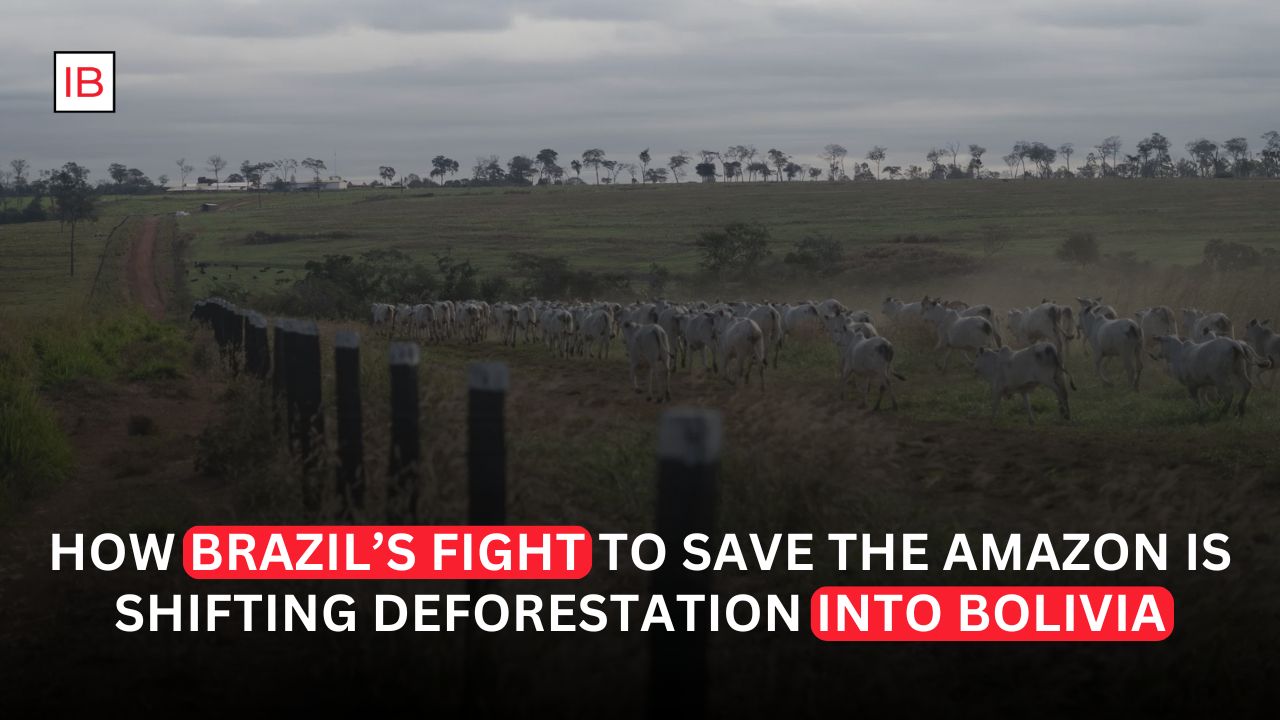
Deforestation across the Amazon is increasingly shifting toward Bolivia as Brazil strengthens efforts to protect its portion of the rainforest.
The change highlights a growing challenge for environmental policymakers: protecting one part of the Amazon can influence economic activity and land-use decisions elsewhere.
As Brazil increases enforcement and expands protections against illegal forest clearing, farmers, ranchers and other land users may face greater restrictions on expanding into protected areas. In Bolivia, comparatively weaker enforcement and different land-use policies can create incentives for agricultural expansion.
Brazil Tightens Protection
Brazil contains the largest share of the Amazon rainforest and has historically accounted for a major portion of Amazon deforestation.
Government efforts to reduce forest destruction have included:
- Increased environmental enforcement.
- Satellite monitoring.
- Restrictions on illegal land clearing.
- Protected areas.
- Fines and penalties.
- Efforts to combat illegal logging.
These measures can make it more difficult and expensive for producers to clear forests for agriculture or cattle ranching.
The stronger enforcement has contributed to significant changes in land-use patterns in parts of the Brazilian Amazon.
Bolivia Faces Different Pressures
Bolivia has also experienced significant forest loss, driven largely by agricultural expansion and land clearing.
The country has extensive areas of Amazon rainforest and other forest ecosystems, but economic pressures can encourage conversion of forest into farmland and pasture.
Agriculture remains an important part of Bolivia’s economy, and demand for land can increase when producers seek to expand output.
Cattle and Agriculture Drive Clearing
One of the main drivers of deforestation across the Amazon is the expansion of agriculture.
Forest can be cleared to create land for:
- Cattle grazing.
- Soybeans.
- Corn.
- Other crops.
- Infrastructure.
Once forests are removed, the land can become part of a larger agricultural production system.
Rising commodity prices can increase the incentive to convert forest into productive farmland.
The Regional Displacement Problem
The situation illustrates a difficult problem known as leakage or displacement.
When environmental policies reduce deforestation in one location, economic activity can sometimes move to another location where regulations are less restrictive.
In this case, stronger protections in Brazil may reduce forest clearing within Brazilian territory while increasing the relative attractiveness of land expansion elsewhere.
That does not mean Brazil’s environmental policies directly cause deforestation in Bolivia, but regional economic incentives can interact in complicated ways.
Commodity Demand Connects the Amazon
The Amazon’s forests are linked to global commodity markets.
Demand for agricultural products creates economic incentives for land development across South America.
Global consumers may never see the forest being cleared, but their demand for:
- Beef.
- Soy.
- Agricultural products.
- Timber.
can influence land-use decisions thousands of kilometers away.
This makes Amazon conservation a global economic issue rather than simply a local environmental concern.
Infrastructure Can Accelerate Deforestation
Roads and other infrastructure can make previously remote forest areas more accessible.
Once transportation networks expand, the cost of moving agricultural products to markets falls.
That can make forest conversion economically more attractive.
Infrastructure can therefore create a cycle:
New roads → greater accessibility → higher land values → agricultural expansion → more deforestation
The effect can be particularly strong in regions where environmental enforcement is limited.
Climate Consequences Extend Beyond Borders
Deforestation in Bolivia does not only affect Bolivia.
The Amazon plays an important role in the global climate system by storing large quantities of carbon and influencing rainfall patterns.
When forests are destroyed, stored carbon can be released into the atmosphere.
Deforestation can also reduce the forest’s ability to absorb additional carbon dioxide.
Changes in forest cover may further affect regional rainfall and agricultural conditions.
Indigenous Communities Face Pressure
Forest loss can also affect Indigenous communities whose livelihoods depend on forests.
Many communities rely on forests for:
- Food.
- Water.
- Medicine.
- Traditional resources.
- Cultural activities.
Expansion of agricultural land and infrastructure can increase pressure on these communities and create conflicts over land ownership and use.
Conservation Requires Regional Cooperation
The changing pattern of deforestation demonstrates why Amazon conservation cannot depend entirely on individual countries.
The rainforest spans several nations, including:
- Brazil.
- Bolivia.
- Peru.
- Colombia.
- Venezuela.
- Ecuador.
- Guyana.
- Suriname.
- French Guiana.
Environmental policies in one country can influence economic incentives in neighboring countries.
Regional cooperation could therefore become increasingly important for preventing deforestation from simply shifting across borders.
Economic Development vs. Conservation
Bolivia faces a difficult policy challenge.
The country needs economic growth, employment and agricultural production, but rapid expansion into forests can create long-term environmental costs.
Governments must balance the immediate economic benefits of land development with the long-term value of preserving forests.
This is particularly difficult for developing economies where rural communities depend heavily on agriculture.
Looking Ahead
The rise in deforestation in Bolivia while Brazil strengthens protection of the Amazon illustrates the complexity of environmental policy.
Reducing forest loss in one country is important, but it may not be enough if economic incentives encourage land clearing elsewhere.
The future of the Amazon will depend not only on stronger enforcement but also on agricultural policy, commodity markets, infrastructure development and international cooperation.
Protecting the rainforest will ultimately require policies that make sustainable economic activity more attractive than destroying forests.
The shift toward Bolivia serves as a warning that environmental progress must be measured across the entire Amazon region. Otherwise, reductions in deforestation in one area could be partly offset by rising forest loss somewhere else.