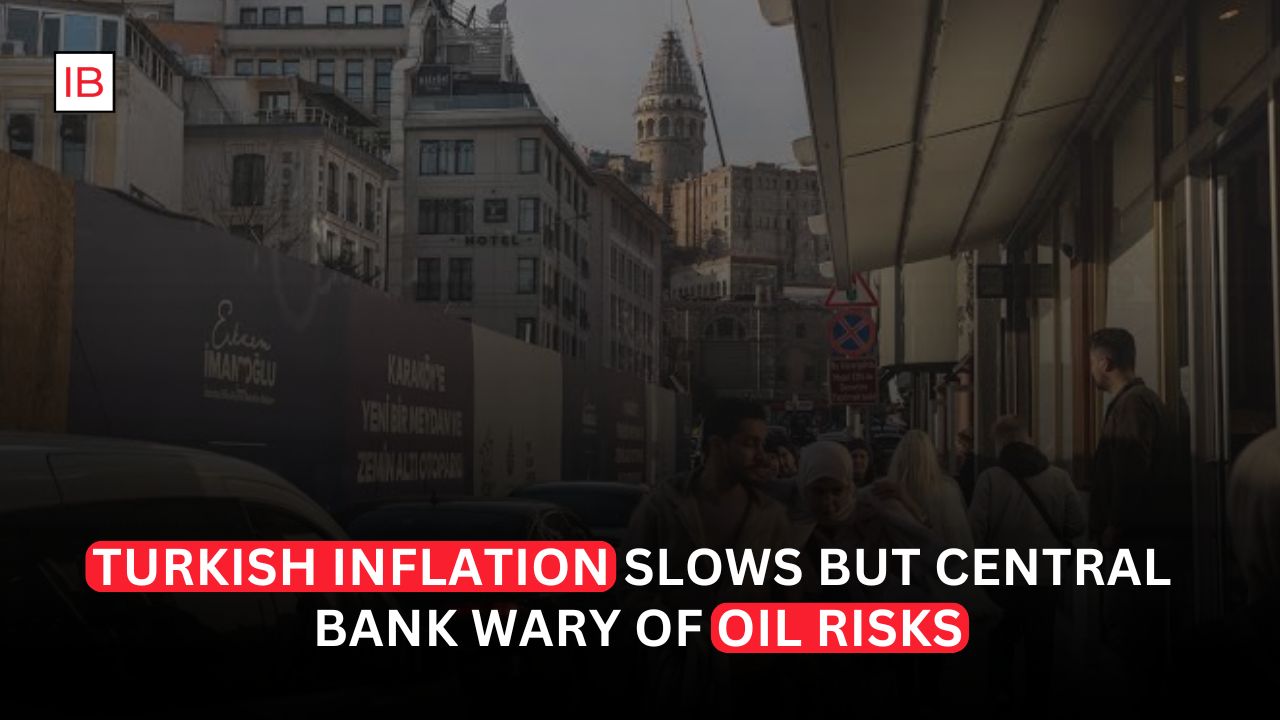
Turkey’s annual inflation rate slowed slightly more than expected in July, offering a modest sign of progress in the country’s long disinflation campaign, but volatile energy prices tied to the Iran war are likely to keep the central bank locked in a cautious, wait-and-see stance for months to come.
A Small Step in the Right Direction
Turkey’s annual inflation eased to 31.75% in July, down from 32.11% in June, coming in slightly below market expectations of 31.8% and marking the lowest reading since March. The improvement was driven largely by slower price growth in housing and utilities, which eased to 40.32% from 45.14% the previous month, alongside more modest slowdowns in transport and in alcoholic beverages and tobacco. Not every category moved in the right direction, however, with food and non-alcoholic beverage inflation actually accelerating to 37.53% from 35.45%, alongside faster price growth in clothing, footwear, and household goods.
The Central Bank Holds Steady, Again
The Central Bank of the Republic of Turkey kept its benchmark policy rate unchanged at 37% for a fourth consecutive meeting in July, a decision widely expected by markets. Policymakers noted that underlying inflation had eased modestly in June, but cautioned that leading indicators pointed to a temporary pickup in July, consistent with the mixed signals now showing up in the official data. The bank has held its rate steady since January 2026, when it delivered a 100-basis-point cut that brought the rate down to its current level, with the pace of any further easing now hinging heavily on how durably inflation continues to moderate.
Energy Prices Remain the Central Risk
Much of the central bank’s caution traces directly back to the ongoing conflict tied to Iran, which has kept global energy prices elevated and volatile since fighting began earlier this year. Turkey, as a major energy importer, remains particularly exposed to swings in oil and natural gas prices, which feed quickly into transportation costs, import prices, and broader inflation expectations across the economy. The central bank has explicitly warned that rising energy prices amid heightened geopolitical uncertainty continue to pose meaningful upside risks to its disinflation path, even as underlying price pressures show tentative signs of easing.
That concern prompted a significant revision to the bank’s own forecasts back in May, when Governor Fatih Karahan announced the bank had raised its interim inflation target for the end of 2026 to 24%, up sharply from a previous target of 16%, citing what officials described as extraordinary revisions to underlying assumptions caused by the geopolitical shock. The bank’s official inflation forecast now places annual inflation at 26% by the end of 2026 and 15% by the end of 2027, with a return to the medium-term 5% target not expected until 2028. Those revised projections were built on an assumed average oil price of $89.40 a barrel for 2026, underscoring just how directly the war has reshaped Turkey’s monetary policy outlook.
What Economists Expect Next
Despite the cautious tone, some economists still see room for gradual policy normalization later this year if inflation data continues cooperating. Analysts have suggested the central bank could begin easing funding costs before formally resuming rate cuts, with some projecting the policy rate could fall to around 34% by the end of 2026 should the disinflation trend hold. The bank has maintained a 450-basis-point spread between its overnight borrowing and lending rates and has continued funding markets through its overnight lending channel rather than resuming weekly repo auctions, a signal that policymakers remain unwilling to loosen conditions prematurely.
A Currency Under Watch
Beyond inflation itself, the central bank has also kept a close eye on the lira’s stability, which came under renewed pressure following domestic political turbulence, including a Turkish court ruling that removed the country’s opposition leader. Currency stability and inflation control remain closely linked in Turkey’s policy framework, given how quickly lira depreciation can pass through to import prices and reignite inflationary pressure.
What Comes Next
With the central bank’s next policy meeting scheduled for September 10, followed by additional meetings in October and December, the coming months will offer a clearer picture of whether July’s modest improvement in inflation can be sustained. Much will depend on how the Iran conflict evolves and whether energy prices stabilize or spike again, a dynamic that will likely continue shaping the pace of Turkey’s disinflation process, and the central bank’s willingness to ease policy, for the remainder of 2026.