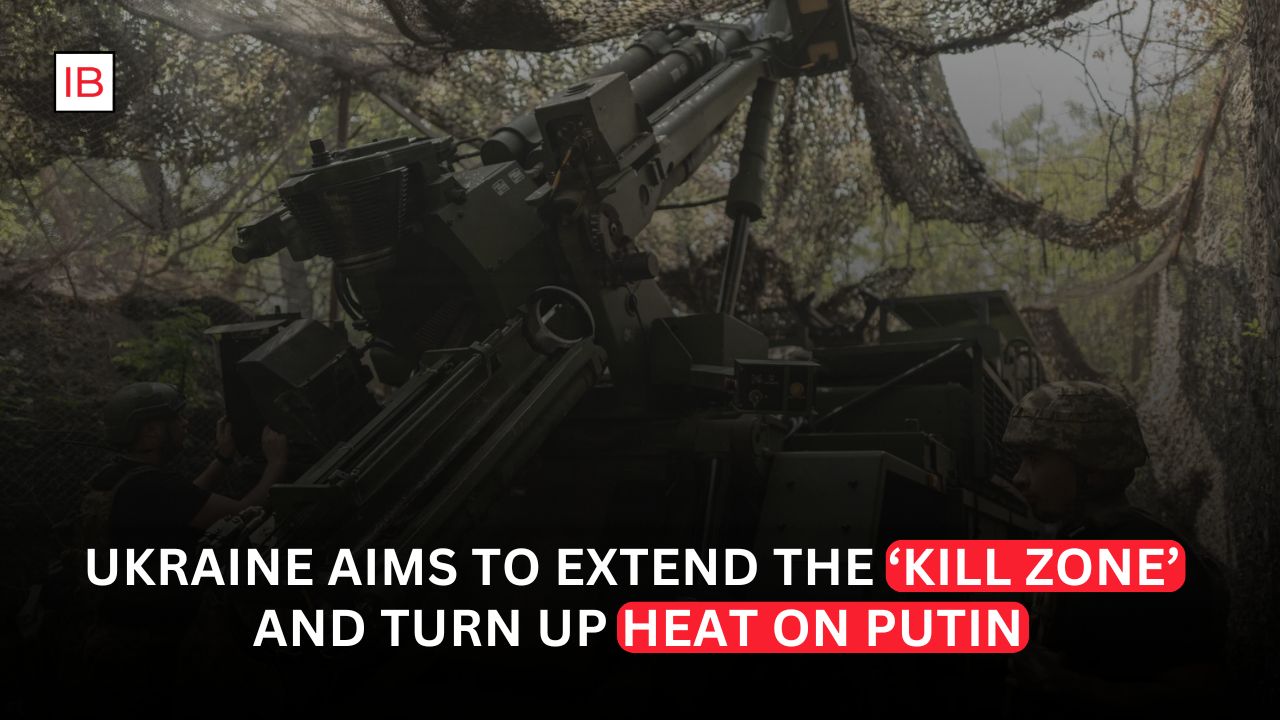
Ukrainian artillery crews are set to receive extended-range shells by the end of summer, a technological upgrade Kyiv hopes will dramatically widen the deadly no-man’s-land separating its forces from Russia’s along the sprawling frontline.
New Shells, Longer Reach
The first wave of deliveries will extend the range of Ukraine’s 155mm cannons to at least 60 kilometers, roughly 37 miles, and will include laser-guided munitions capable of far greater precision than conventional shells. More advanced munitions equipped with small ramjet engines could more than double that distance again, letting Ukrainian forces strike deep behind Russian lines without repositioning their existing artillery infrastructure. All of the new shells are designed to be compatible with the 155mm batteries Ukraine already operates, meaning the upgrade can be integrated without an entirely new weapons platform.
What the “Kill Zone” Already Looks Like
The concept of a frontline “kill zone” — an area where neither side can move troops or equipment without facing near-certain detection and attack — has become a defining feature of the war’s current phase. Along the eastern front, that zone of mutual attrition already extends roughly 20 to 25 kilometers on both sides of the contact line, according to Ukrainian commanders, with expectations it could reach 30 kilometers by the end of 2026.
Drone warfare has fundamentally reshaped how that zone functions. Drones now account for 70% to 80% of battlefield damage in some sectors, while traditional artillery has fallen to under 30%, a dramatic inversion from the war’s early years. Extending Ukraine’s artillery range would allow Kyiv to push that lethal zone even further into Russian-held territory, threatening supply lines and logistics hubs previously out of reach.
A War Now in Its Fifth Year
The push for longer-range weaponry comes as the war grinds on with little sign of a near-term resolution. Fighting now stretches along more than 1,200 kilometers of frontline, with intense daily combat producing only marginal territorial changes on either side. Defense analysts have described the conflict as effectively stalemated in terms of territory, even as casualty figures remain severe, with estimates suggesting over 1,000 Russian soldiers and up to several hundred Ukrainian soldiers are killed on particularly intense days.
Despite the human toll, neither side has shown clear signs of pursuing a negotiated end to the fighting. Russian President Vladimir Putin has reportedly rejected recent advice from his own advisers to pursue a ceasefire, with Kremlin sources indicating a “high probability” of further escalation in the months ahead rather than a move toward peace talks.
Putin’s Continued Resistance to Compromise
Putin’s public posture has remained firmly maximalist. During a meeting with Kazakhstan’s president in late July, Kazakh leader Kassym-Jomart Tokayev called for both sides to freeze the current frontline and return to Istanbul-format negotiations, but Putin did not respond publicly to the appeal. Kremlin spokesman Dmitry Peskov later indicated Putin views freezing the frontline as impossible, insisting Russia must achieve its full battlefield objectives before any resolution can be reached, which continues to include territorial claims over Donetsk, Luhansk, Zaporizhzhia, and Kherson in their entirety.
Ukrainian President Volodymyr Zelensky has separately warned that intelligence suggests the Kremlin is preparing for a significant wave of involuntary reserve call-ups in the fall, a sign Moscow may be gearing up for a renewed push rather than winding down its war effort.
Why Extended-Range Weapons Matter Strategically
By pushing Ukraine’s effective strike range further into Russian-controlled territory, the new shells are intended to complicate Moscow’s ability to safely stage troops, supplies, and equipment near the frontline, potentially forcing Russian forces to operate from greater distances and disrupting the logistics that have sustained their grinding, incremental advances. Combined with Ukraine’s already extensive drone capabilities, the expanded kill zone represents an effort to raise the operational cost of Russia’s continued offensive posture, even without producing dramatic shifts in territorial control.
What Comes Next
With the first extended-range shells expected to reach Ukrainian units by the end of summer, their real impact will depend on how effectively they’re integrated into Ukraine’s broader defensive and offensive operations along a front that has proven remarkably resistant to major breakthroughs by either side. As both Moscow and Kyiv show little appetite for compromise, and with Russia reportedly preparing for expanded mobilization later this year, the war’s fifth year appears likely to bring continued attritional fighting rather than a swift path toward resolution.