The US labor market delivered a major upside surprise in August, with employers adding 162,000 jobs and sharply exceeding expectations for a modest rebound. The stronger-than-anticipated report offers fresh evidence that the economy remains resilient, but it also complicates the Federal Reserve’s interest-rate debate as policymakers weigh persistent inflation against signs of a still-solid labor market.
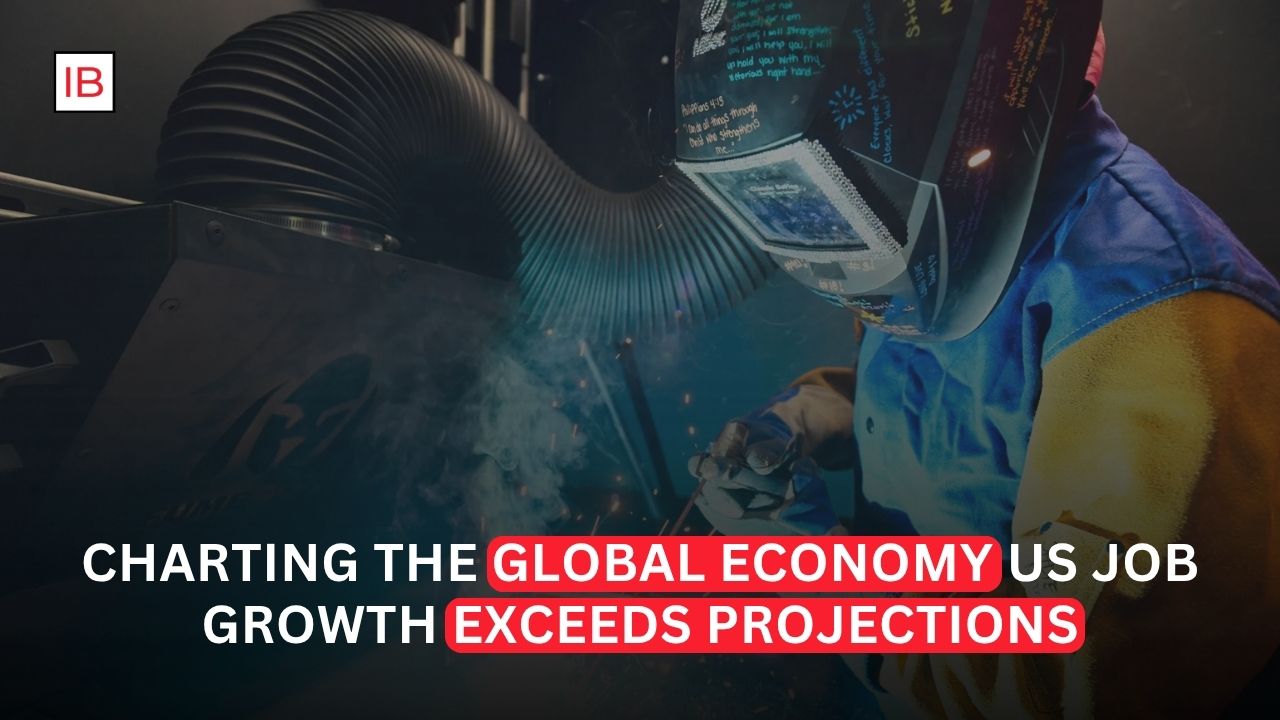
Nonfarm payroll employment increased by 162,000 in August, according to data released Friday by the US Bureau of Labor Statistics. The gain was far above the roughly 50,000 to 60,000 jobs economists had expected and represented the strongest monthly increase in five months. The unemployment rate remained unchanged at 4.1%, while the labor-force participation rate edged higher to 61.6%.
The report represents a notable improvement from the weakness seen earlier in the summer. Government data also revised previous estimates higher, with June payroll growth raised to 31,000 from 20,000 and July employment revised to a 21,000 increase from an earlier reported decline of 23,000. Together, the revisions lifted employment growth for those two months by 55,000 jobs compared with previous estimates.
The numbers challenge the idea that the US employment market was rapidly deteriorating. Instead, they suggest that hiring regained momentum as the economy moved through August, although the underlying picture remains less robust than the headline number indicates.
A significant portion of the August increase came from industries that can be affected by seasonal patterns. Food services and drinking places added 59,000 jobs, well above their average monthly increase over the previous year. Local government education employment rose by 42,000, largely reversing a decline recorded in July.
Private-sector employment also remained relatively healthy. Manufacturing added 16,000 jobs, continuing an upward trend that has produced a 58,000 increase since December 2025. Health-care employment rose by 13,000, although the pace of gains was considerably slower than its average over the previous year. Construction employment increased by 22,000.
At the same time, not every part of the economy is expanding. Employment in the information sector fell by 23,000, with losses reported among computing infrastructure providers, data-processing and web-hosting businesses, publishing companies, and broadcasting and content providers. The decline comes as companies across the technology industry increasingly restructure operations around automation and artificial intelligence.
The labor-market report therefore contains an important contradiction. Overall employment growth was much stronger than expected, but several indicators suggest that workers are not necessarily experiencing an equally powerful improvement in their economic position.
Average hourly earnings for private-sector workers increased by 0.3% during August, reaching $37.75. Annual wage growth slowed to 3.1%, compared with 3.2% in July. That moderation could be welcomed by Federal Reserve officials concerned about inflation because slower wage growth reduces the risk of persistent labor-cost pressures feeding into consumer prices.
The unemployment rate remaining at 4.1% also gives policymakers a relatively stable labor-market picture. The number of unemployed people stood at about 7 million, while the number of long-term unemployed remained near 1.9 million. The long-term unemployed represented 27% of all unemployed workers.
The stronger employment report nevertheless immediately changed expectations for Federal Reserve policy. Markets increased bets that the central bank could keep interest rates higher for longer or potentially raise rates at its September meeting. Treasury yields moved higher after the report as investors reassessed the possibility that policymakers would be reluctant to ease monetary policy while economic activity remains resilient.
The data arrive at a particularly difficult moment for the Fed. Policymakers are balancing two competing risks. On one side is the possibility that inflation remains too high for comfort. On the other is the concern that restrictive interest rates could eventually weaken employment and economic growth.
The August jobs figures reduce the urgency to support the labor market through lower interest rates. If businesses continue hiring and unemployment remains relatively low, policymakers have more flexibility to concentrate on controlling inflation.
But the report does not provide a completely straightforward argument for tighter monetary policy.
Wage growth is slowing, long-term unemployment remains elevated and labor-force participation is still below its January level. The economy has also been operating under pressure from higher energy prices, geopolitical uncertainty and the effects of earlier trade measures.
That means the Fed may view the labor market as resilient without concluding that the economy is overheating.
Financial markets are now likely to focus heavily on inflation data ahead of the Fed’s September 16 meeting. The employment report has shifted the balance of risks, but it does not determine the central bank’s decision by itself. Inflation readings will help determine whether policymakers interpret the stronger hiring numbers as evidence of sustainable economic strength or as a temporary rebound.
The jobs data also have implications for President Donald Trump’s continuing pressure on the Federal Reserve to lower borrowing costs. Trump has repeatedly pushed for lower interest rates, arguing that cheaper credit would support economic growth. A stronger labor market makes that argument more difficult from the perspective of policymakers concerned about inflation.
For businesses and consumers, the implications are mixed. Continued hiring supports household incomes and consumer spending, helping the economy avoid a sharper slowdown. But higher interest rates in response to strong employment data could increase borrowing costs for mortgages, businesses and consumers.
The labor market itself may also be entering a different phase. Rather than the rapid job creation seen during the post-pandemic recovery, companies appear increasingly focused on efficiency, automation and selective hiring. The losses in parts of the information industry illustrate how technological change can generate strong productivity gains while reducing demand for certain categories of workers.
Artificial intelligence is becoming particularly relevant to that transition. Technology companies are investing heavily in AI infrastructure while simultaneously examining which administrative, technical and content-related functions can be automated. The decline in information-sector employment therefore deserves attention even against the backdrop of strong overall payroll growth.
The August report also suggests that the labor market may be stronger than the extremely weak July headline initially indicated. The upward revision of July from a 23,000 job decline to a 21,000 increase significantly changes the narrative around the summer slowdown. Instead of two consecutive months of job losses, the revised data show continued, albeit modest, employment growth before August’s acceleration.
Still, investors should avoid treating the 162,000 figure as proof that the US economy has returned to a period of rapid expansion. The three-month trend remains much weaker than during earlier phases of the economic cycle, and several components of the report point toward a labor market that is stable rather than booming.
The distinction will be important for the Federal Reserve. Policymakers need to determine whether August marks the beginning of a sustained acceleration or simply a rebound from unusually weak readings earlier in the summer.
For financial markets, the immediate consequence is clear: expectations for interest rates have become more sensitive to incoming economic data. A stronger labor market reduces the probability of rapid monetary easing, while evidence of renewed inflation could strengthen the case for maintaining or increasing borrowing costs.
The next major test will therefore come from inflation.
If consumer-price data show continued pressure while employment remains strong, the Fed could face a difficult choice between maintaining restrictive policy and risking a later deterioration in hiring. If inflation moderates, however, policymakers could still argue that the economy is strong enough to absorb gradually lower rates.
For now, the August employment report has pushed the balance toward caution.
The US economy created far more jobs than expected, unemployment remained at a historically low level and previous employment figures were revised upward. Yet wage growth moderated and some sectors continued to shed workers.
The result is a labor market that looks considerably more resilient than feared, but not uniformly strong. For the Federal Reserve, that may be the most important message of all. The economy is not signaling an urgent need for rate cuts, but neither is it delivering an unequivocal case for aggressive tightening.
As markets look toward the Fed’s September meeting, the August jobs report has therefore transformed the policy debate. The question is no longer whether the labor market is weakening rapidly. Instead, policymakers must determine whether this unexpected rebound is strong enough to keep inflation risks alive—and whether interest rates need to remain restrictive for longer as a result.