The government is limiting the funds available to support domestic gold purchases as it seeks to balance reserve accumulation, currency stability, and pressure on public finances.
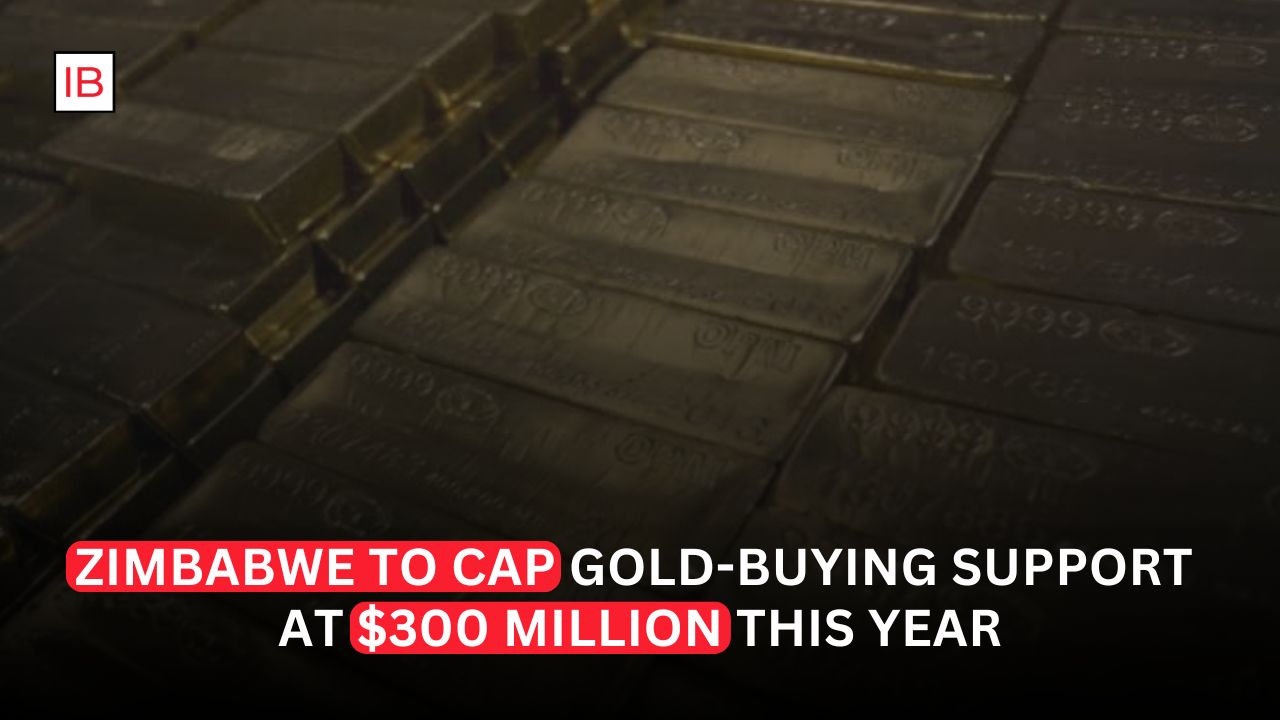
Zimbabwe plans to cap financial support for gold purchases at $300 million this year, placing a limit on the resources available to the country’s gold-buying system. The decision comes as authorities continue using gold and foreign-currency reserves as important tools for strengthening the Zimbabwean economy and supporting confidence in the ZiG currency.
Gold remains one of Zimbabwe’s most important sources of foreign exchange, with higher international prices helping boost export earnings. The Reserve Bank of Zimbabwe has also identified the accumulation of gold and foreign-currency reserves as a central part of its strategy for strengthening monetary stability and building protection against external shocks.
Gold Remains Central to Zimbabwe’s Economy
Zimbabwe has significant gold production from both large mining companies and artisanal and small-scale miners. The sector has become increasingly important as the government seeks to increase formal gold deliveries and reduce the amount of precious metal that leaves the country through informal channels.
Recent data showed strong gold production activity. Deliveries to Fidelity Gold Refinery increased substantially in May, with small-scale miners accounting for the majority of total output.
The strong performance has benefited from elevated global gold prices, which have increased the value of Zimbabwe’s exports and encouraged miners to bring more production into formal channels.
Government Seeks Greater Control Over Gold Flows
The $300 million ceiling reflects an effort to manage the amount of public or central-bank resources committed to purchasing gold.
Zimbabwe’s authorities have been working to strengthen the formal gold market and ensure that more domestic production enters official channels. Increasing official purchases can help the country build reserves, improve foreign-currency liquidity, and support the credibility of its monetary system.
However, buying large amounts of gold requires substantial financial resources. A spending limit therefore allows authorities to maintain support for the sector while keeping tighter control over available foreign currency and government finances.
Gold Supports the ZiG Currency
The policy is also closely connected to Zimbabwe’s efforts to stabilize its local currency.
The Reserve Bank’s strategy calls for accumulating gold, foreign currency, and other reserves to provide a buffer for economic shocks and support interventions in the foreign-exchange market. The central bank has continued building foreign-currency reserves backing the ZiG, while maintaining a focus on monetary stability.
Gold provides Zimbabwe with an asset that can be held as part of its reserves rather than relying entirely on foreign currencies. This is particularly important for a country that has experienced severe currency instability in previous years.
Higher Gold Prices Provide Support
The timing of the policy is significant because international gold prices have remained exceptionally strong.
The World Bank has projected that precious-metal prices will remain elevated in 2026, with gold supported by geopolitical uncertainty, investment demand, and continued central-bank purchases.
For Zimbabwe, higher prices mean that every ounce of officially exported gold can generate more foreign-exchange revenue. This has helped strengthen the country’s external position and contributed to increased foreign-currency inflows.
Reserve Bank data showed that foreign-currency receipts increased sharply during the first quarter of 2026, with exports accounting for the majority of inflows. Higher prices for gold, platinum-group metals, lithium, and tobacco supported export performance.
Small-Scale Miners Remain Important
Zimbabwe’s artisanal and small-scale mining sector plays a particularly important role in gold production.
Small-scale miners accounted for about 69% of gold deliveries to Fidelity Gold Refinery in May, demonstrating how heavily the country’s gold industry depends on smaller producers.
The government therefore faces a balancing act. It needs to provide enough support to encourage miners to sell through official channels while preventing the gold-buying system from placing excessive pressure on limited financial resources.
Greater formalization could also improve government revenue collection and provide authorities with better visibility over production and exports.
Challenges Remain
The biggest challenge will be maintaining gold production and official deliveries while operating within the new financial ceiling.
If international gold prices remain high, miners may continue to have strong incentives to produce and sell their output. But authorities must also ensure that official buyers have sufficient liquidity to purchase gold at competitive prices.
Zimbabwe also continues to face broader economic challenges, including the need to maintain currency stability and build adequate foreign-exchange reserves. The Reserve Bank reported foreign reserves of around $1.4 billion in March 2026, equivalent to roughly 1.5 months of import cover.
That makes careful management of available foreign currency particularly important.
Looking Ahead
Zimbabwe’s decision to cap gold-buying support at $300 million highlights the growing importance of gold to the country’s monetary and economic strategy. Strong global prices and rising domestic production provide an opportunity to increase foreign-exchange earnings, but authorities must balance that opportunity against limited financial resources.
The policy is likely to keep gold at the center of Zimbabwe’s efforts to strengthen reserves, support the ZiG, and improve economic stability. Continued growth in formal gold deliveries could provide an important source of foreign currency, particularly if global prices remain elevated.
For Zimbabwe, the challenge now is ensuring that the gold sector continues generating strong export revenues without creating excessive pressure on the country’s financial resources. How effectively authorities manage that balance will be important for the country’s currency and broader economic outlook.