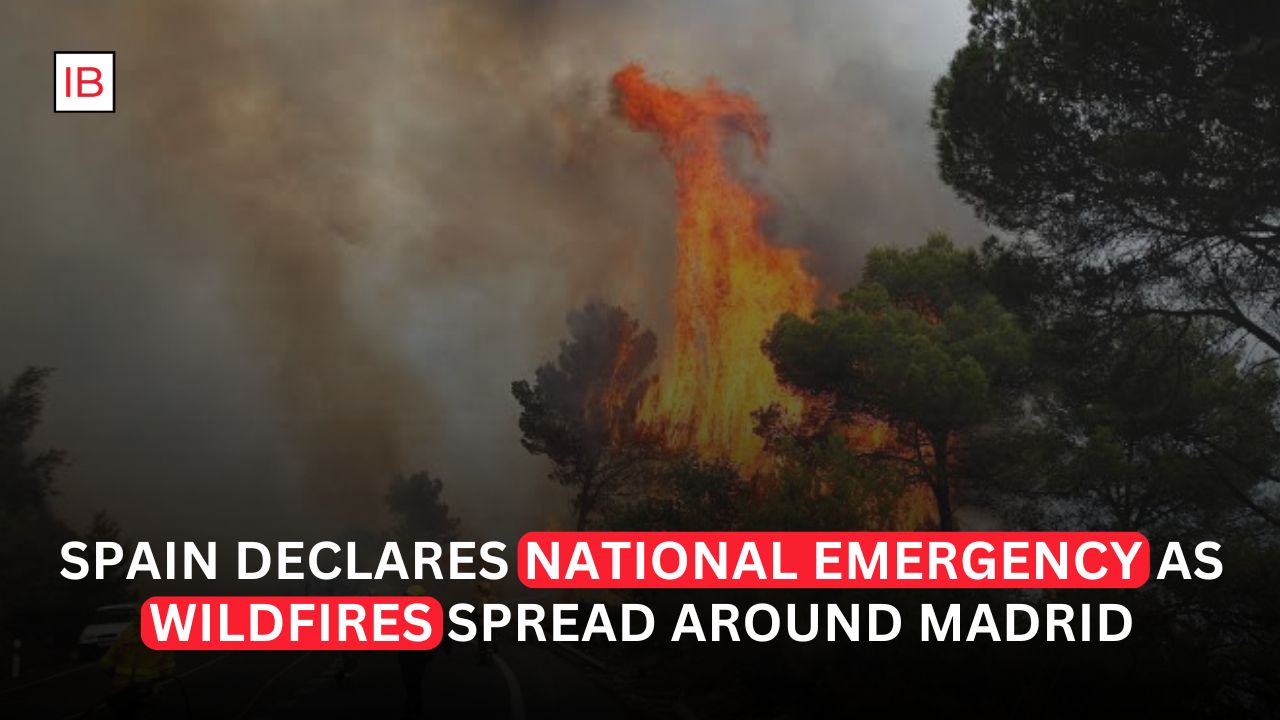
Government Mobilizes Military and Emergency Services as Blazes Threaten Communities Near the Capital
Spain has declared a national emergency after a series of fast-moving wildfires spread across areas surrounding Madrid, forcing evacuations, disrupting transportation, and prompting one of the country’s largest emergency responses in recent years. Authorities say the combination of extreme heat, strong winds, and prolonged dry conditions has created ideal circumstances for the fires to expand rapidly, placing thousands of residents at risk and stretching emergency resources.
The emergency declaration allows Spain’s central government to coordinate firefighting operations nationwide, mobilize additional military units, and provide greater support to regional authorities battling multiple fires simultaneously. Officials described the situation as one of the most serious wildfire emergencies to affect the Madrid region in recent years, with firefighters working around the clock to contain advancing flames.
Emergency Response Intensifies
Following the declaration, the government deployed hundreds of additional emergency personnel, specialized firefighting aircraft, military emergency units, and civil protection teams to assist local authorities. Firefighters have been operating continuously in difficult conditions, using helicopters and water-dropping aircraft to slow the spread of the flames while ground crews establish containment lines.
Authorities also activated emergency coordination centers to oversee evacuations, monitor fire behavior, and ensure resources are distributed efficiently among the most severely affected areas. Police and civil defense officials have been assisting residents forced to leave their homes while securing communities threatened by the advancing fires.
Officials stressed that protecting human life remains the highest priority, with emergency crews focusing first on safeguarding populated areas before shifting attention to protecting forests, farmland, and infrastructure.
Extreme Weather Fuels the Crisis
Meteorologists say exceptionally high temperatures, low humidity, and strong winds have significantly increased wildfire risk across central Spain. Months of below-average rainfall left vegetation unusually dry, allowing fires to spread quickly once ignited.
The challenging weather conditions have made containment efforts more difficult, as shifting winds continue changing the direction of the flames. Fire officials warned that even small sparks can rapidly develop into major wildfires under current conditions, prompting authorities to urge the public to avoid activities that could accidentally start new fires.
Environmental experts note that southern Europe has experienced increasingly severe wildfire seasons in recent years as prolonged heatwaves and droughts become more frequent.
Evacuations and Transport Disruptions
Thousands of residents have been evacuated from communities located near active fire zones as authorities work to ensure public safety. Temporary shelters have been established to accommodate displaced families, while emergency medical teams remain on standby to assist vulnerable residents.
The fires have also disrupted transportation around Madrid, with several roads temporarily closed due to smoke and dangerous fire conditions. Rail services in some areas have experienced delays as authorities monitor nearby fire activity, while poor air quality has prompted health advisories encouraging residents to remain indoors whenever possible.
Officials have asked the public to follow evacuation instructions immediately and avoid traveling into affected areas unless absolutely necessary, allowing emergency crews unrestricted access to firefighting operations.
Environmental and Economic Impact
Beyond the immediate threat to communities, the wildfires are expected to have significant environmental and economic consequences. Large areas of forest, natural habitats, and agricultural land have already been damaged, raising concerns about biodiversity loss and long-term ecological recovery.
Farmers in affected regions are assessing damage to crops, livestock, and rural infrastructure, while tourism businesses face potential losses as visitors avoid areas impacted by smoke and emergency restrictions. Experts warn that recovery efforts could take months after the fires are fully contained, particularly in environmentally sensitive areas.
The fires also highlight growing concerns across Europe about the increasing frequency and intensity of extreme weather events linked to rising temperatures.
Looking Ahead
Spain’s declaration of a national emergency underscores the seriousness of the wildfire crisis facing the country. Emergency services continue working tirelessly to contain the fires, protect communities, and minimize further damage despite challenging weather conditions.
Authorities have pledged to maintain all available resources until the situation is under control, while urging residents to remain vigilant and follow official guidance. As firefighters battle multiple blazes around Madrid, the coming days will be critical in determining whether changing weather conditions can help slow the spread of the fires.
The disaster serves as another reminder of the growing wildfire risks confronting Southern Europe, where prolonged droughts, intense heatwaves, and climate-related challenges are placing increasing pressure on emergency services and local communities. Spain’s response will likely shape future strategies for wildfire prevention, disaster preparedness, and climate resilience as the country continues facing increasingly severe fire seasons.