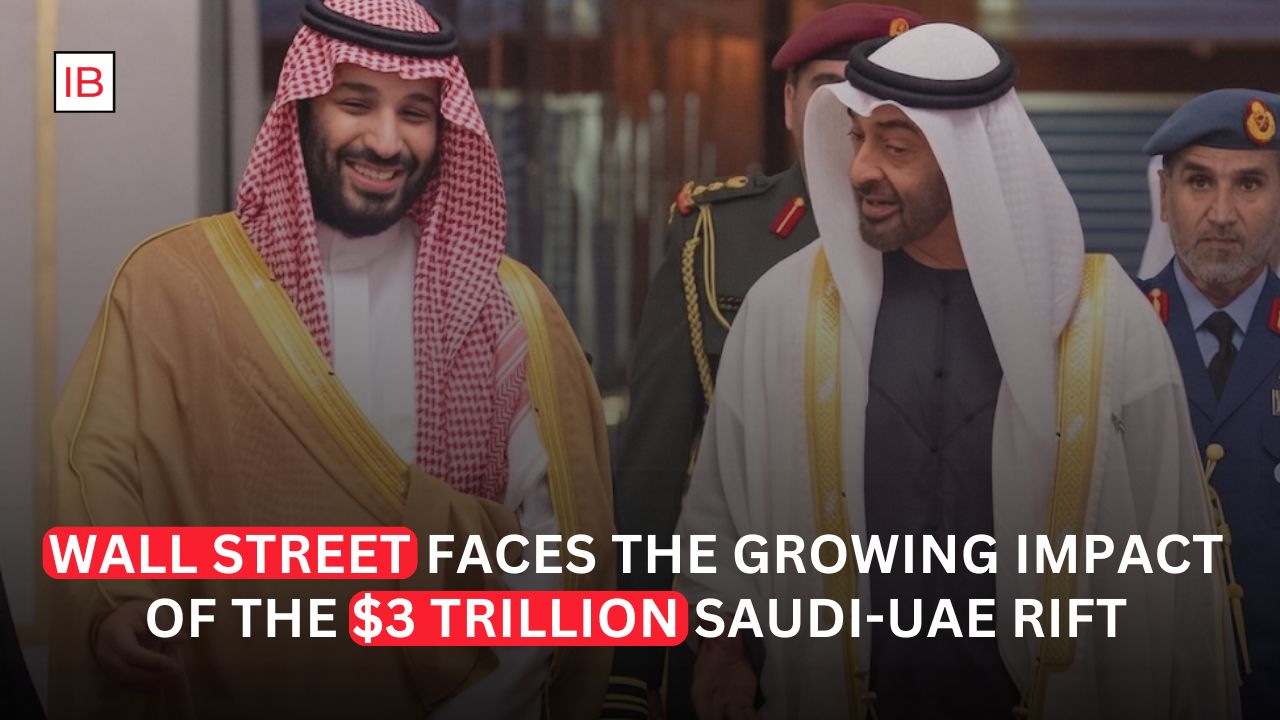
Rising Political and Economic Tensions Between Gulf Powers Could Reshape Global Investment Flows
The increasingly strained relationship between Saudi Arabia and the United Arab Emirates (UAE) is drawing growing attention from global investors, with analysts warning that the rift between the Gulf’s two largest economies could have significant implications for financial markets, energy policy, and international business.
Once viewed as close strategic partners, Saudi Arabia and the UAE have developed growing differences over regional politics, economic competition, and energy policy. As both nations compete to become leading global financial and investment hubs, Wall Street firms are closely monitoring the evolving relationship.
From Allies to Economic Rivals
Saudi Arabia and the UAE have spent years working together on regional security and economic initiatives.
However, recent disagreements have highlighted growing competition in areas including:
- Regional leadership
- Foreign policy
- Energy strategy
- Financial services
- Investment attraction
Both countries are investing heavily to diversify their economies beyond oil, creating direct competition for international businesses and capital.
Financial Friction Raises Business Concerns
Recent reports indicate that some businesses have experienced delays or disruptions when transferring money between Saudi Arabia and the UAE.
Although Saudi authorities deny imposing country-specific financial restrictions, companies operating across both markets have reported payment delays that have complicated cross-border business operations.
Some firms have reportedly resorted to alternative payment routes to complete transactions.
Wall Street Has Billions at Stake
Global investment banks and asset managers have expanded their presence across both Gulf nations in recent years.
The region has become increasingly important due to:
- Sovereign wealth fund investments
- Capital market growth
- Initial public offerings (IPOs)
- Infrastructure financing
- Artificial intelligence investments
Any deterioration in relations could complicate investment strategies for financial institutions seeking opportunities in both countries.
Competition for Global Capital Intensifies
Saudi Arabia and the UAE are both working to establish themselves as leading international business destinations.
Their strategies include:
- Attracting multinational headquarters
- Investing in AI and technology
- Expanding financial markets
- Developing tourism
- Supporting innovation and startups
While this competition has encouraged economic reforms, it has also intensified rivalry for global investors and businesses.
Energy Policy Differences Emerge
Energy has become another source of disagreement between the two countries.
The UAE’s decision to leave OPEC earlier this year highlighted differing approaches to oil production and long-term energy policy.
As two of the world’s largest energy exporters, any policy divergence between Saudi Arabia and the UAE is closely watched by global oil markets and institutional investors.
Why Global Investors Are Watching
For international investors, stability within the Gulf Cooperation Council has long been viewed as a positive factor for regional investment.
Areas receiving close attention include:
- Cross-border trade
- Banking operations
- Sovereign wealth investments
- Energy cooperation
- Regional economic integration
Analysts believe prolonged tensions could influence investment decisions, particularly for multinational firms with operations across both countries.
Looking Ahead
The growing rivalry between Saudi Arabia and the UAE marks a significant shift in Gulf geopolitics. While both countries remain major economic powers and important destinations for global capital, their increasing competition is becoming an important consideration for investors and financial institutions.
As Wall Street continues expanding its presence in the Gulf, developments in the Saudi-UAE relationship are likely to play a key role in shaping regional investment opportunities, energy markets, and the future of one of the world’s fastest-growing economic regions.