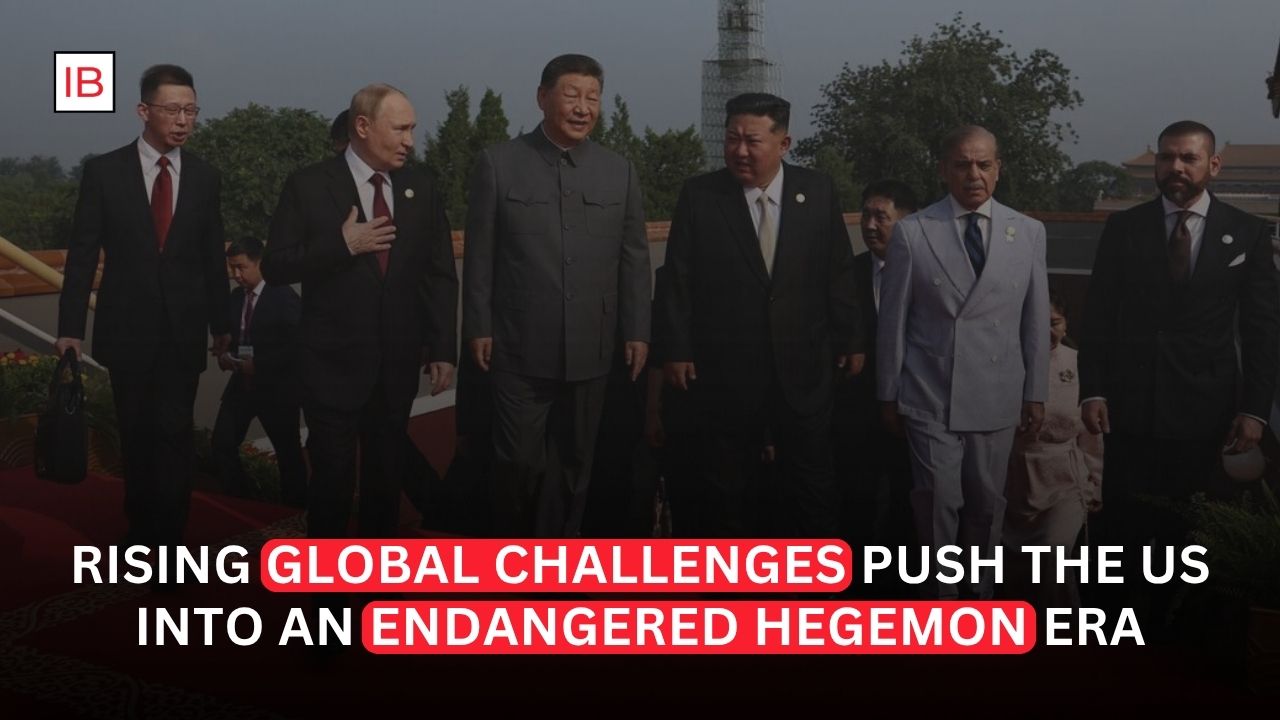
The US is not collapsing, and claims that American power is about to disappear are exaggerated. The more serious problem is subtler: the country is entering a period in which maintaining global dominance is becoming more difficult, more expensive and more politically complicated.
For decades, America enjoyed an unusually favorable combination of economic strength, military superiority, technological leadership, demographic advantages and global alliances. That combination allowed Washington to shape international institutions, dominate global finance, protect major trade routes and project military power across multiple continents.
Those advantages have not disappeared.
But they are no longer uncontested.
China has become a genuine peer competitor in several strategic areas. Other countries are increasingly willing to pursue independent foreign policies rather than automatically align with Washington. America’s population is aging, its fiscal pressures are increasing and domestic political divisions are making long-term strategy harder to sustain.
The result is not necessarily American decline in the traditional sense.
It is the beginning of an aging-hegemon era in which the United States remains extraordinarily powerful but has less room for strategic mistakes.
1. America Is Still the World’s Most Powerful Country

The first mistake in any discussion of American decline is to underestimate how powerful the United States remains.
America still possesses several advantages that no competitor can easily reproduce simultaneously.
Key American advantages include:
- The world’s largest economy by nominal GDP
- The dominant global reserve currency
- Deep and liquid financial markets
- A powerful technology sector
- World-leading universities and research institutions
- A global network of military alliances
- The world’s most capable long-range military
- Significant energy production
- Major influence over international financial institutions
- A huge domestic consumer market
The Council on Foreign Relations notes that the United States continues to possess enormous economic, military and diplomatic resources even as China reduces America’s traditional strategic advantages.
That distinction matters.
America is not an old empire that has suddenly become weak.
It is a powerful country confronting a world in which other countries have become stronger.
That is a very different problem.
2. The Real Threat Is Relative Decline
A country does not need to become poorer to lose geopolitical influence.
It only needs other countries to become powerful faster.
Imagine America growing at 2% annually while another major economy grows at 5%. Over a few decades, the difference becomes enormous.
This is why China’s rise matters so much.
The United States can continue growing while simultaneously losing some of its relative economic advantage.
The strategic equation is changing:
Old model:
US power >> competitors
Emerging model:
US power > competitors
That difference is enormous.
When Washington possessed overwhelming superiority, it could make mistakes without immediately losing strategic ground.
In a more competitive world, mistakes become expensive.
A failed military intervention, poorly designed trade policy, diplomatic dispute or prolonged fiscal imbalance can have consequences that competitors are ready to exploit.
3. China Is the Most Important Challenge
China is the central reason America’s hegemonic position is under pressure.
Beijing does not need to defeat the United States militarily to challenge American leadership.
It can gradually build alternatives.
China has expanded its influence through:
- Manufacturing
- Infrastructure investment
- Trade
- Technology
- Artificial intelligence
- Shipbuilding
- Renewable energy
- Electric vehicles
- Critical minerals
- Diplomatic relationships
- Military modernization
China’s objective is not necessarily to become an identical replacement for America.
Instead, Beijing wants a world in which Washington cannot dictate outcomes in Asia or impose its preferences globally without considering Chinese power.
That objective is already changing the strategic environment.
The US-China relationship has therefore become more than a competition over trade.
It is increasingly a competition over:
- Technology
- Supply chains
- Military power
- Financial influence
- Industrial capacity
- Standards
- Artificial intelligence
- Access to resources
- Global institutions
The danger for Washington is that these competitions reinforce one another.
A country with strong manufacturing can produce military equipment.
A country with advanced technology can improve its military.
A country with financial influence can support its geopolitical objectives.
Power becomes cumulative.
4. America’s Aging Population Creates a Structural Problem
The word “aging” in the idea of an aging hegemon is important.
Military and economic power ultimately depend on people.
A shrinking or aging workforce can reduce economic growth while increasing the costs associated with pensions and healthcare.
That creates a difficult equation.
Governments increasingly face:
- Higher healthcare spending
- Higher retirement costs
- Slower workforce growth
- Greater pressure on public finances
- Increased demand for social programs
- Fewer workers supporting each retiree
America has an advantage that China lacks in one important respect: immigration has historically helped the US maintain population growth and replenish its workforce.
But immigration itself has become politically divisive.
That means America’s demographic advantage cannot simply be assumed.
If the United States wants to remain economically dynamic, it needs a combination of productivity growth, technological innovation, workforce participation and sustainable population growth.
AI may help productivity.
But technology cannot automatically solve demographic politics.
5. America’s Fiscal Problem Is Becoming More Important
Another major vulnerability is government debt.
The United States enjoys an unusual privilege because the dollar is the world’s dominant reserve currency.
Washington can borrow enormous sums at comparatively favorable rates because global investors continue to demand US Treasury securities.
But that privilege should not be confused with unlimited financial capacity.
As interest payments consume more of the federal budget, the government has less flexibility.
The long-term problem is simple:
More debt → more interest payments → less fiscal flexibility.
That matters during a geopolitical crisis.
A superpower needs the ability to respond quickly to wars, recessions, technological disruptions and emergencies.
If too much of the budget is already committed to existing obligations, policymakers have fewer options.
The United States therefore faces a paradox.
It has extraordinary borrowing capacity, but the more aggressively it uses that capacity, the more expensive future borrowing can become.
6. The Dollar Is America’s Greatest Financial Weapon — and a Potential Vulnerability
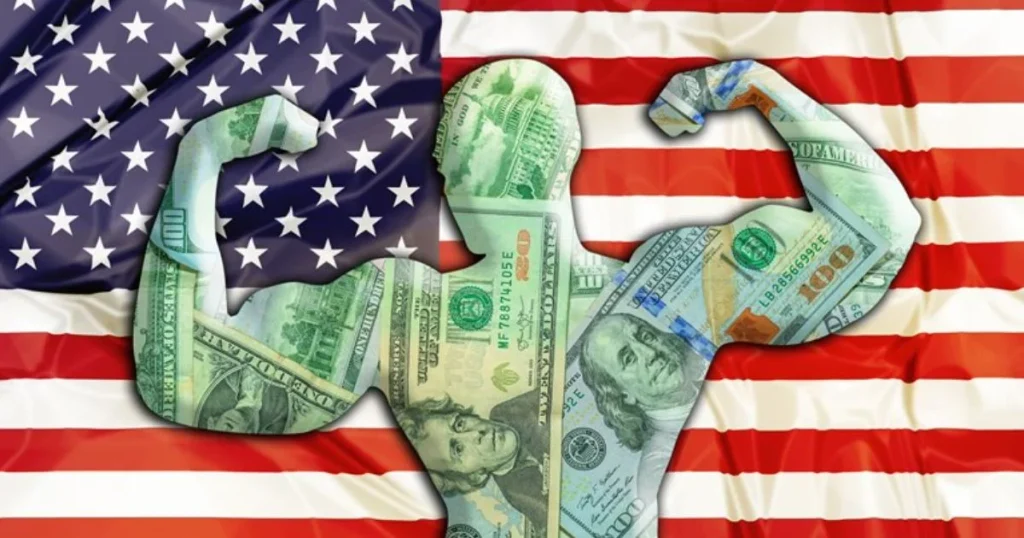
The dollar remains the foundation of America’s financial influence.
International trade, commodities, banking and central-bank reserves rely heavily on dollar-based infrastructure.
That gives Washington enormous advantages.
The United States can impose financial sanctions, influence international capital flows and borrow from a global pool of investors.
But financial dominance depends on confidence.
The biggest threat to the dollar is not necessarily another currency suddenly replacing it.
A more realistic risk is gradual diversification.
Countries may increasingly hold:
- Euros
- Gold
- Yuan
- Other currencies
- Domestic assets
That would not destroy the dollar.
But even a gradual reduction in global dependence could weaken one of America’s most important sources of leverage.
The dollar’s strength therefore depends on more than military power.
It depends on confidence in American institutions, markets and economic management.
7. America’s Technological Advantage Is Still Massive
This is where predictions of imminent American collapse become particularly weak.
The United States remains exceptionally strong in technology.
American companies dominate important areas of:
- Artificial intelligence
- Cloud computing
- Software
- Semiconductor design
- Venture capital
- Biotechnology
- Aerospace
- Advanced computing
The US also benefits from world-class universities and research institutions.
According to data cited by the Council on Foreign Relations, the United States continues to lead significantly in research investment, AI development, university rankings and highly cited researchers.
This gives America something extremely valuable:
the ability to reinvent itself.
That may be more important than today’s GDP rankings.
A country that leads in the technologies of tomorrow can remain powerful even if its share of global manufacturing declines.
But there is a condition.
The United States must continue investing.
Technological leadership cannot be inherited permanently.
8. AI Could Strengthen America — or Accelerate Its Problems
Artificial intelligence introduces a strange possibility.
AI could help an aging America become more productive despite slower population growth.
If machines can perform more cognitive and physical tasks, the country may be able to produce more with fewer workers.
That could offset demographic pressure.
But AI could also increase inequality.
If the economic gains from AI flow primarily to a small number of companies and highly skilled workers, wealth concentration could increase.
That creates political instability.
The technology could therefore become either:
a productivity revolution
or
an inequality accelerator.
The outcome will depend heavily on education, taxation, labor markets and access to technology.
America’s technological advantage is therefore not enough.
It needs institutions capable of distributing the benefits.
9. The US Military Remains Unmatched — But It Is Expensive
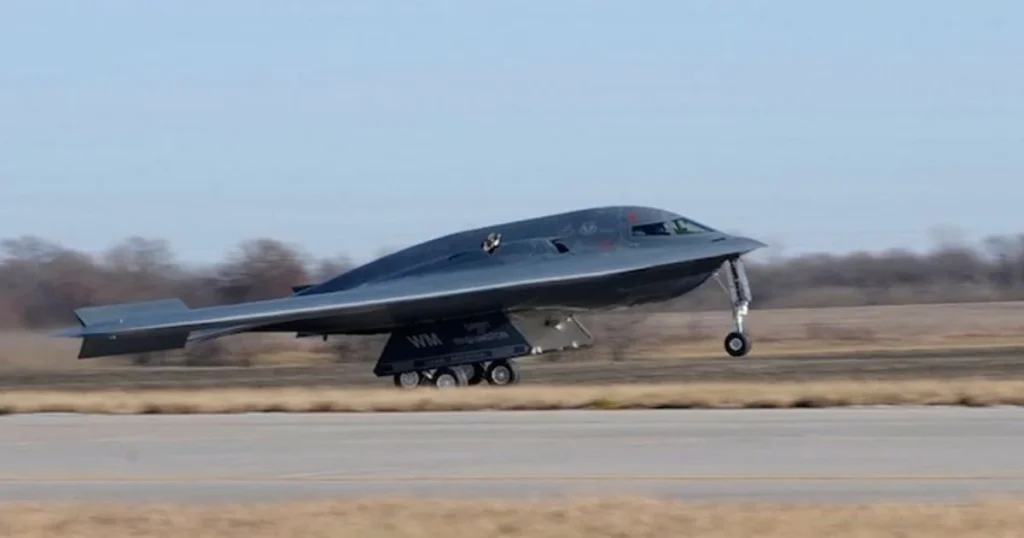
American military power remains one of the country’s strongest advantages.
The United States operates:
- A global network of military bases
- Nuclear forces
- Aircraft carriers
- Nuclear submarines
- Advanced aircraft
- Long-range missiles
- Space capabilities
- Cyber forces
- Intelligence networks
- Global logistics infrastructure
No other country can reproduce that entire system.
China is closing some gaps, particularly in naval power and missile capabilities, but America’s global military reach remains unique.
The problem is cost.
Maintaining global military superiority requires enormous spending.
And Washington is simultaneously trying to prepare for several different theaters.
The US must consider:
- China and Taiwan
- Russia and Europe
- Middle East conflicts
- North Korea
- Cybersecurity
- Space competition
- Maritime security
- Homeland defense
That creates the classic problem of an overstretched hegemon.
There may simply be too many commitments.
10. The Alliance System Is America’s Secret Weapon
America’s greatest advantage may not actually be its military.
It may be its allies.
Washington has security relationships with countries across Europe and Asia that collectively represent enormous economic and technological power.
Japan, South Korea, Australia and European NATO members provide capabilities, bases, intelligence and economic strength that dramatically expand America’s influence.
This creates a strategic advantage China cannot easily copy.
The United States does not have to compete with China alone.
It can compete as part of a network.
The Council on Foreign Relations argues that America’s alliance system remains an essential component of its ability to preserve influence and balance Chinese power.
But alliances require maintenance.
If allies begin believing that Washington is unreliable, transactional or unpredictable, they may gradually hedge.
That is why diplomatic credibility matters.
11. Trump’s America-First Approach Creates a Strategic Dilemma
The United States is increasingly debating whether maintaining global leadership is worth the cost.
One school of thought argues that America has spent too much money protecting other countries while allowing its own industrial base and middle class to weaken.
The alternative is to concentrate resources at home and reduce international commitments.
That argument has genuine strengths.
America cannot do everything.
But there is a serious counterargument.
The global system America helped build also benefits the United States.
Open trade routes, stable financial markets, military alliances and international institutions create advantages for American companies and consumers.
If Washington retreats too far, competitors will not simply leave empty space.
China and other powers will move into it.
The debate is therefore not simply:
globalism vs nationalism.
The real question is:
Which international commitments actually increase American power, and which merely consume it?
That is a much harder question.
12. America’s Industrial Base Is a Growing Concern
For decades, America shifted enormous amounts of manufacturing abroad.
That helped consumers obtain cheaper goods but also created vulnerabilities.
China now dominates many strategic manufacturing sectors.
These include:
- Batteries
- Solar equipment
- Industrial machinery
- Shipbuilding
- Electric vehicles
- Certain critical minerals
- Consumer electronics
America has begun responding with industrial policy and investment incentives.
But rebuilding manufacturing capacity is not quick.
A factory can be constructed in years.
A complete industrial ecosystem can take decades.
It requires:
- Skilled workers
- Suppliers
- Engineers
- Ports
- Energy
- Machinery
- Capital
- Technical expertise
That is why industrial policy is now becoming part of national security.
13. The Aging-Hegemon Problem Is Also Psychological
There is another dimension that is easy to miss.
Power is partly psychological.
Countries behave differently when they believe the United States will intervene, respond or retaliate.
If that confidence weakens, competitors may become more aggressive.
Allies may hedge.
Neutral countries may demand concessions.
Investors may diversify.
That creates a feedback loop.
Perception can influence reality:
Less confidence → weaker influence → more challenges → higher costs → less confidence.
This is how hegemonic decline can accelerate.
The danger is therefore not simply losing ships, factories or GDP.
It is losing the expectation that American power will remain decisive.
14. America Should Not Try to Defend Everything
One of the strongest arguments against an overstretched American strategy is that resources are limited.
Washington cannot simultaneously maintain overwhelming superiority in every region and every military domain indefinitely.
Strategic prioritization is unavoidable.
The Indo-Pacific is likely to become the most important theater because China’s economic and military power is concentrated there.
Europe should increasingly contribute more to European defense.
Middle Eastern partners can assume greater responsibility for regional security.
That does not mean abandoning those regions.
It means changing the division of labor.
America’s goal should be to remain the indispensable power, not necessarily the only power doing everything.
15. China Also Has Serious Weaknesses
A balanced analysis must avoid replacing American exceptionalism with Chinese exceptionalism.
China has major structural problems.
These include:
- Rapid population aging
- Low fertility
- High debt
- Property-market weakness
- Youth unemployment
- State intervention in parts of the economy
- Dependence on external markets
- Difficulties developing certain advanced technologies independently
The demographic problem is particularly serious.
China became rich while its population was still relatively large and its workforce was expanding.
That process is now reversing.
Its working-age population is shrinking while the elderly population grows.
This could place increasing pressure on economic growth and public finances.
So the United States should not assume that China will inevitably overtake it.
The more realistic conclusion is that both powers have vulnerabilities.
16. India and Other Middle Powers Matter More Than Before
The future will not necessarily be a simple US-China bipolar world.
India is becoming increasingly important.
So are:
- Japan
- South Korea
- Australia
- Brazil
- Saudi Arabia
- United Arab Emirates
- Turkey
- Indonesia
- European powers
These countries increasingly want strategic autonomy.
They may cooperate with Washington on one issue and Beijing on another.
That makes the world more complicated.
America’s future influence will depend partly on whether it can persuade these countries that cooperation with the United States provides more benefits than dependence on China.
Diplomacy therefore becomes an economic and strategic asset.
17. What Would Actual American Decline Look Like?
American decline would not look like the collapse of an ancient empire overnight.
It would probably look like gradual erosion.
Possible warning signs include:
- Slower productivity growth
- Persistent fiscal deterioration
- Reduced technological leadership
- Loss of dollar confidence
- Weakening alliances
- Industrial dependence on strategic rivals
- Political inability to make long-term decisions
- Military overstretch
- Demographic stagnation
- Increasing social polarization
None of these individually would destroy America.
The danger comes from their interaction.
If several occur simultaneously, America’s strategic flexibility could shrink considerably.
18. What Could Reverse the Trend?
The situation is not predetermined.
America still has enormous resources.
A successful renewal strategy would likely require several components.
Economic renewal
The US needs higher productivity rather than simply higher government spending.
Technological leadership
Investment in AI, biotechnology, semiconductors, energy and advanced manufacturing should remain a priority.
Fiscal discipline
Washington needs to slow the growth of debt and entitlement costs without damaging economic growth.
Immigration reform
America’s ability to attract skilled workers remains a major competitive advantage.
Alliance management
The US should ask allies to contribute more while also treating them as strategic partners rather than permanent dependents.
Military prioritization
Resources should concentrate on the most important strategic challenges rather than attempting to dominate every possible theater equally.
Institutional stability
The credibility of American institutions is itself a strategic asset.
19. The Biggest Risk Is Complacency
The most dangerous assumption for the United States would be that its current advantages will automatically continue.
They will not.
Technology changes.
Demographics change.
Markets change.
Alliances change.
Military technology changes.
Countries that were once weak become powerful.
The United States became the dominant global power partly because previous generations invested heavily in infrastructure, education, science, industry and institutions.
Maintaining that position requires another generation to do the same.
20. America Does Not Need to Be Number One at Everything
There is also a useful correction to the traditional definition of hegemony.
America does not need to dominate every economic sector.
It does not need to have the largest manufacturing industry.
It does not need to control every supply chain.
It does not need to prevent every rival from gaining influence.
What matters is whether America retains enough advantages to shape the international system.
That means maintaining leadership in the areas that matter most.
Those areas increasingly include:
- Advanced technology
- Artificial intelligence
- Financial markets
- Energy
- Military power
- Semiconductors
- Aerospace
- Scientific research
- Higher education
- Global alliances
If America remains dominant across enough of these categories, it can remain the world’s leading power even in a more multipolar system.
Conclusion: The End of American Dominance Is Not Inevitable
The phrase “aging, endangered hegemon” is useful because it identifies a genuine tension.
America is still extraordinarily powerful.
But it is no longer operating in the unusually favorable environment that followed the collapse of the Soviet Union.
China is stronger.
Middle powers are more independent.
The American population is aging.
Fiscal pressures are increasing.
The costs of maintaining global military commitments are rising.
Domestic political divisions make long-term strategy more difficult.
Yet the United States still possesses extraordinary advantages.
Its economy remains enormous. Its technology sector is exceptionally powerful. Its universities attract global talent. Its financial markets remain central to the world economy. Its military reach is unmatched. And its network of alliances gives it a strategic depth that no competitor can easily reproduce.
The critical issue is therefore not whether America will “collapse.”
That framing is too simplistic.
The real question is whether the United States can renew its foundations faster than its competitors can close the gap.
If it succeeds, the country could remain the world’s most influential power for decades even without the overwhelming dominance it enjoyed in the immediate post-Cold War era.
If it fails, the decline will probably be gradual rather than dramatic.
America would still be rich.
It would still be militarily powerful.
Its companies would still be globally important.
The dollar would probably remain dominant.
But Washington would increasingly have to negotiate rather than dictate, compete rather than command and share influence rather than assume it.
That is what an aging hegemon looks like.
The United States is not finished.
But the era in which American power could be treated as essentially unlimited is ending.
The next phase will depend on whether Washington recognizes that distinction early enough to adapt.
The country does not need to preserve the exact international system of the past.
It needs to preserve the capabilities that made American leadership possible in the first place: economic dynamism, technological innovation, military strength, demographic renewal, institutional credibility and strong alliances.
If those foundations remain healthy, a more multipolar world does not have to mean an American defeat.
It could instead mean the United States remains the most powerful player in a system where it finally has to earn that position every day.