Jet Maker Sees Potential Upside to Official Guidance as Supply Chains Stabilize
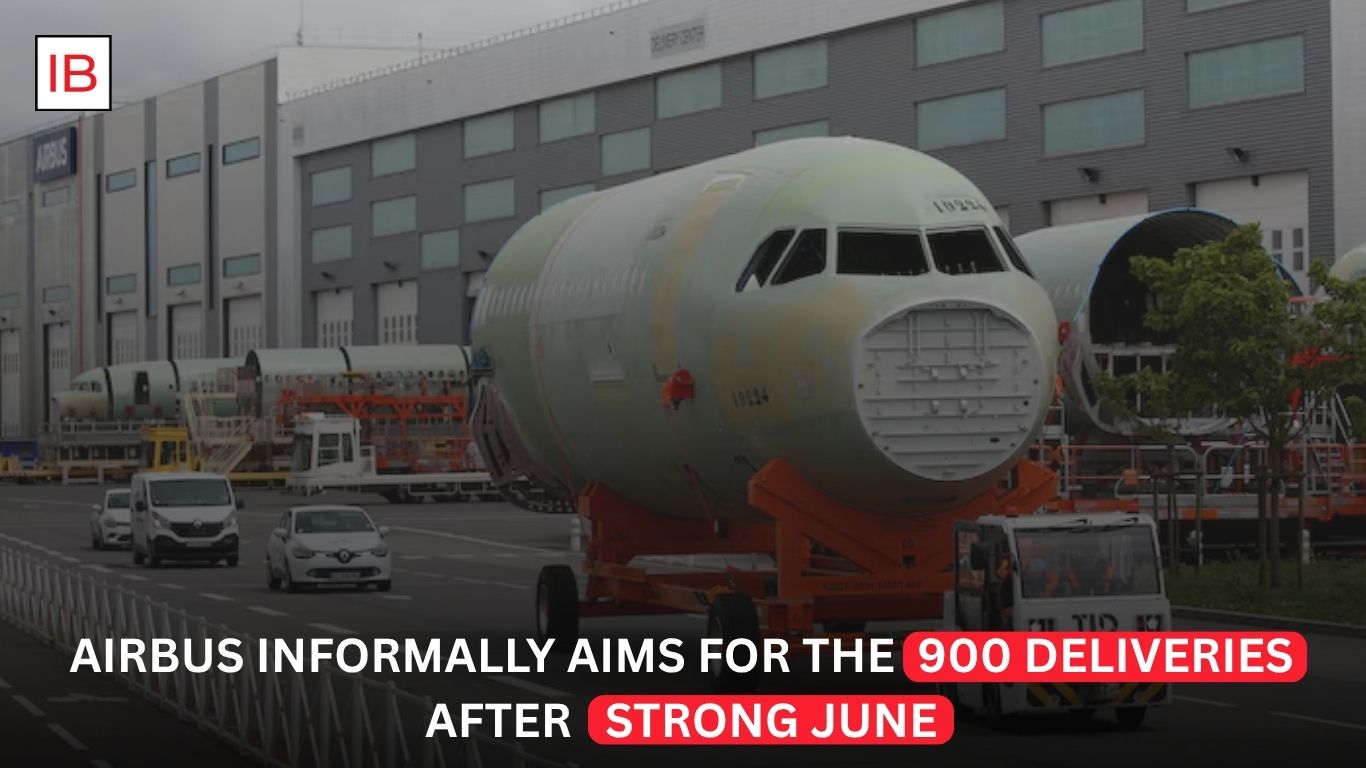
Airbus SE is informally targeting more than 900 aircraft deliveries in 2026, exceeding its official guidance of 870 jets, after a strong June performance that reinforced expectations of a faster production ramp-up in the second half of the year.
The internal goal reflects improving delivery momentum across Airbus’s commercial aircraft programs, driven by easing supply chain constraints and a temporary catch-up in delayed handovers, particularly to Chinese airlines.
Strong June Boosts Half-Year Performance
Airbus delivered 89 aircraft in June, bringing total deliveries for the first half of 2026 to 351 jets, a roughly 15% increase year-on-year.
Key highlights include:
- Strongest first-half delivery performance since 2019
- Recovery in monthly production pace after earlier bottlenecks
- Improved engine supply availability
- Catch-up deliveries, particularly in Asia
The June performance reinforces confidence that Airbus can accelerate output in the second half of the year.
Official Guidance Remains Unchanged
Despite the stronger internal outlook, Airbus has not revised its official full-year target, which remains at:
- 870 aircraft deliveries for 2026
The gap between official guidance and internal expectations highlights cautious corporate messaging amid persistent uncertainty in global aerospace supply chains.
Supply Chain Improvements Support Ramp-Up
The delivery improvement has been supported by several operational factors:
- Partial easing of engine supply bottlenecks
- Recovery of delayed aircraft deliveries
- Stabilization in parts availability across key suppliers
- Improved production flow in the A320 family program
However, Airbus continues to face constraints in its efforts to reach higher monthly output targets.
China Deliveries Help Clear Backlog
A key driver of recent delivery strength has been the resumption of deliveries to China, which had previously been delayed due to regulatory and logistical disruptions.
This catch-up effect has helped Airbus:
- Reduce outstanding backlog pressure
- Smooth delivery scheduling across regions
- Boost short-term monthly output figures
Analysts note that such catch-up cycles can temporarily inflate delivery momentum.
Production Still Faces Structural Constraints
Despite improvements, Airbus continues to face long-term supply challenges, including:
- Engine availability limitations
- Delays in cabin equipment and fuselage components
- Capacity constraints among tier-one suppliers
- Pressure to scale A320neo production
These factors continue to limit how quickly Airbus can sustainably increase output.
Industry Eyes Second-Half Acceleration
Airbus typically sees a stronger second half of the year, and analysts expect:
- Monthly delivery rates to rise toward ~80 aircraft
- Continued improvements in supply chain efficiency
- Potential upside to official forecasts if momentum holds
The company is estimated to deliver around 80 jets in July, reinforcing expectations of steady acceleration.
Competitive and Market Context
Airbus’s delivery performance is closely watched because it directly impacts:
- Revenue recognition timing
- Cash flow generation
- Competitive positioning against Boeing
- Investor confidence in aerospace recovery
The broader industry continues to recover from pandemic-era disruptions while managing persistent supplier constraints.
Looking Ahead
While Airbus is maintaining conservative official guidance, its informal target of 900 deliveries signals growing confidence in production stability.
If the second-half ramp-up proceeds as expected, Airbus could:
- Exceed official delivery guidance for 2026
- Strengthen its position as the world’s leading aircraft manufacturer
- Further reduce its multi-year backlog pressures
The coming months will determine whether current momentum translates into sustained production gains or remains a temporary recovery driven by backlog normalization.